Lambs Among WolvesChapter 4
The Counterfeits That Deceive
Not every burning desire to build is a calling from God—some of them are good longings gone feral, grasping for what was always meant to be received.

In this letter
I knew it was calling. I was sure of it.
The desire was overwhelming—this compulsion to build, to create something, to step into the marketplace and make my mark. It had all the right textures. It felt urgent and important and God-given. I could even trace it back to good things: the satisfaction of solving problems, the desire to provide for my family, the longing to do work that mattered.
So I built. I planned. I calculated. I lay awake at three in the morning running scenarios, and when the anxiety tightened in my chest, I told myself that’s what calling feels like. The weight of it. The urgency of it. The way it consumed every waking thought.
I was wrong about what I was feeling.
What I thought was holy fire was something else—something that had crawled inside the good desire and bent it. The longing to provide had become a terror of not having enough. The desire for meaningful work had become a need to be seen as someone who did meaningful work. The draw toward building had become a compulsion to control every outcome.
The desires were real. The hunger was genuine. But somewhere along the way, my fists had closed around what my hands were supposed to hold open.
At some point, the pattern became impossible to ignore. Every time I examined the urgency honestly—not the story I told myself about it, but the actual fear underneath—I found something other than calling. I found grasping.
Good Desires Gone Feral
In The Call That Comes, we explored how God speaks into vocation through Scripture, providence, community, and desire. That’s real. God does call. He sends people into the marketplace with genuine purpose.
But not every strong desire to build is calling. Sometimes it’s something else wearing calling’s clothes. And the counterfeits are devastating precisely because they feel so similar.
Go back to creation. God made humans with good desires. He gave provision freely—food in the garden, everything needed. He bestowed honor—“very good,” image-bearers crowned with glory. He delegated dominion—authority to steward creation under His rule. The desire for security, the longing for significance, the pull toward agency—these aren’t sinful. They’re design.
The Fall didn’t eliminate these desires. It enslaved them.
What we were meant to receive from God’s hand, we now grasp autonomously. The fruit was freely available—God had given every tree except one. But the serpent’s question reframed the gift as restriction: “Did God actually say…?” And Eve saw that the tree was good for food (provision), a delight to the eyes (prestige), desired to make one wise (power). She took. She grasped. And everything shattered.
The original sin wasn’t wanting something bad. It was seizing something good—taking by force what God had designed to be received as gift.
This is why the counterfeits are so hard to detect. They don’t announce themselves as rebellion. They present as ambition. As drive. As calling. The longing to provide for your family is holy—until the fist closes around it and you can’t stop calculating. The desire to do excellent work is beautiful—until it morphs into a desperate need for applause. The impulse to steward wisely is faithful—until it becomes a white-knuckled refusal to depend on anyone, especially God.
Same desires. Different posture. The difference between receiving and grasping.
The Wilderness Test
Jesus faced this directly. And the shape of His temptation tells us everything about the shape of ours.
After forty days of fasting in the wilderness—hungry, depleted, alone—Satan came with three offers. Not three random temptations. Three precisely targeted counterfeits aimed at the same good desires God had built into human nature.
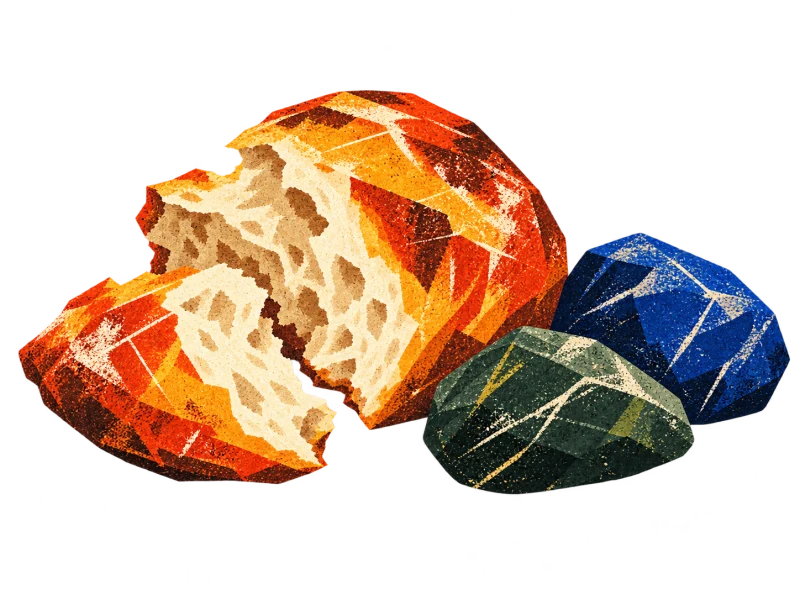
First: “Command these stones to become loaves of bread.”
Provision. Jesus was legitimately hungry. The desire for food wasn’t sinful. But notice what Satan was actually offering: provide for yourself. Don’t wait on the Father. Take your security into your own hands. The counterfeit wasn’t bread—it was independent provision, severed from trust.
Jesus refused: “Man shall not live by bread alone, but by every word that comes from the mouth of God.”
Second: “Throw yourself down” from the pinnacle of the temple, and let the angels catch You in front of everyone.
Prestige. A spectacular rescue, a public validation, proof of identity through performance. Show them who You are. Demonstrate Your worth. Let the crowd see it. The counterfeit wasn’t significance—it was significance seized through spectacle instead of received from the Father.
Jesus refused: “You shall not put the Lord your God to the test.”
Third: all the kingdoms of the world and their glory, offered in a single moment. “All these I will give you, if you will fall down and worship me.”
Power. Every kingdom. Total control. Grasp it now. Why wait? Why the slow, costly way when you can have everything immediately? The counterfeit wasn’t authority—it was authority grasped apart from the Father’s timing and the Father’s path.
Jesus refused: “You shall worship the Lord your God and him only shall you serve.”
Notice what Jesus didn’t do. He didn’t say the desires were wrong. He didn’t refuse bread because hunger is sinful. He didn’t refuse authority because dominion is evil. He didn’t refuse recognition because significance doesn’t matter. He refused the grasping. He refused to seize what the Father had designed to give.
Where Adam and Eve clutched, Jesus opened His hands. Where they grasped for what was freely offered, He waited to receive. This is why His righteousness can be credited to us—He succeeded at the exact point where we fail.
Three Fists
These same counterfeits operate in every entrepreneur. They operated in me. Let me name them.
Prosperity-grasping corrupts the call when the driving force is anxiety about provision. You don’t just want to provide for your family—you want enough that you never have to trust God. The rich fool in Jesus’s parable had land that produced plentifully. His response wasn’t gratitude—it was storage. Bigger barns. More capacity. “Soul, you have ample goods laid up for many years; relax, eat, drink, be merry.” God’s response: “Fool! This night your soul is required of you.”
The man’s harvest wasn’t the problem. The grip was. He was clutching provision as if accumulated wealth could secure his life.
I know this one from the inside. I’ve lain awake running financial projections not because I was stewarding well but because I was terrified. The calculations weren’t planning—they were prayers to a false god of sufficiency. If the number gets high enough, the anxiety will stop. It never stops. The number is never high enough.
Prestige-performing corrupts the call when the driving force is need for validation. You don’t just want to do meaningful work—you want to be seen doing it. The Pharisees broadened their phylacteries and lengthened their tassels, doing everything to be noticed. Ananias and Sapphira sold property and brought the proceeds to the apostles—but they held back secretly while appearing to give everything. They wanted the reputation of radical generosity without the reality of it.
I know this one too. I’ve chosen projects because of how they’d look from the outside. I’ve framed failures as strategic pivots. I’ve needed the validation of being seen as someone who builds—and that need, dressed in calling’s clothes, drove me harder than any genuine word from God.
Power-clutching corrupts the call when the driving force is escape from dependence. You don’t just want to steward resources—you want autonomous control. The builders of Babel put it plainly: “Let us build ourselves a city and a tower with its top in the heavens, and let us make a name for ourselves.” Grasping for significance and control in a single ambitious sentence. God scattered them—not because building is wrong, but because the posture was grasping, not receiving.
I know this one deepest. The entrepreneurial itch was, for years, inseparable from my refusal to depend. On employers. On systems. On God. I wanted control—over my schedule, my income, my outcomes—and I baptized that compulsion with the word calling.
But Aren’t These Desires Good?
I can hear the objection forming: You just said these desires are part of God’s design. Security, significance, agency—you called them good. So how can wanting them be a counterfeit?
It’s the right question. And the answer isn’t that the desires are wrong. The desires are exactly as God designed them. Provision is a real need. Significance is a real longing. Authority is a real gift.
The problem is never the desire. It’s the posture.
There’s a world of difference between a child who receives dinner at the family table and a child who breaks into the pantry at midnight because he doesn’t trust that anyone will feed him. Same hunger. Same food. Entirely different orientation. The first is receiving. The second is grasping.
The counterfeit isn’t wanting provision, prestige, or power. The counterfeit is seizing them—closing your fist around what God designed to place in your open hand.
Philippians 2 says Christ Jesus, “though he was in the form of God, did not count equality with God a thing to be grasped, but emptied himself.” The Greek word—harpagmos—means something to be seized, clutched, held by force. Jesus had every right to the thing He refused to grasp. The issue was never entitlement. It was posture.
That’s the diagnostic. Not what you desire, but how you hold it.
The Diagnostic Question
So here it is, the question that cuts through every disguise: Which fist is closing?
When you imagine building this business, what’s the grip tightening around? When you picture success, what specifically releases the pressure in your chest? When you think about not doing this—staying employed, letting the opportunity pass, remaining dependent—where does the panic concentrate?
If the panic is about provision—How will we survive? What if there’s not enough?—your fist may be closing around prosperity.
If the panic is about visibility—What will people think of me? Will I matter?—your fist may be closing around prestige.
If the panic is about dependence—I can’t stand being under someone else’s authority. I need to control my own life—your fist may be closing around power.
I’m still feeling my way through this. The counterfeits don’t announce themselves once and then politely leave when identified. They shift. They recombine. Some seasons the fist closes around money; other seasons around reputation; sometimes around control so subtly I don’t notice until I realize I haven’t slept in weeks. After years of building, the instincts still run deep.
But recognition is the first mercy. If you see the grasping, you can name it. And if you can name it, you can bring it to Christ.
The answer isn’t to kill the desire. You can’t, and you shouldn’t—God put it there. The answer isn’t willpower, clenching harder against the clenching, trying to force your own hands open. That’s just another kind of grasping.
The answer is confession. Bring the closed fist to the One who opened His hands on the cross. The One who refused every counterfeit in the wilderness—not through superior self-discipline but through absolute dependence on the Father. He actually provides. He actually bestows honor. He actually delegates meaningful work. What you’re grasping for, He’s already extending.
Let the fist open.
Name the counterfeit.
Bring it to Christ.
Receive what you’ve been trying to seize.
The call is real. But it comes with open hands—not clenched fists.